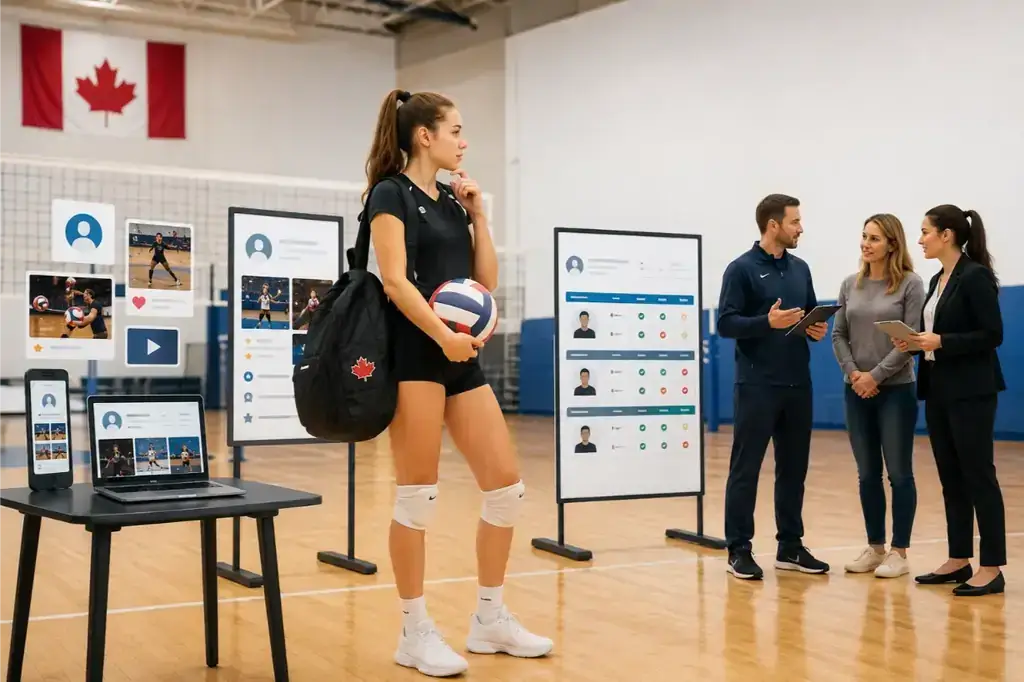

How much should you count on a verbal commitment?
In the world of youth sports, where dreams of scholarships and NCAA jerseys shine bright, families often assume one thing: that a coach’s word is their bond. But the reality is more complicated—and sometimes heartbreaking.
College recruiting is supposed to be an exciting milestone. Instead, for many athletes, it becomes a maze of mixed messages, pressure tactics, and broken promises. And when promises break, the athlete is the one left standing alone, trying to make sense of what happened.
This is the part of recruiting that few people talk about openly.
- The Pressure to Commit: When “We Want You” Turns Into “We Need Your Answer Tonight”
- When Promises Break: The Reality No Athlete Deserves
- The Consequences: Lost Opportunities and Shaken Confidence
- Why It Happens: A System That Rewards Results, Not Integrity
- The System Creates the Behavior
- Pressure Drives Behavior
- Keeping Your Word vs. Getting Results: A Divide That Defines Programs
- How Athletes Can Protect Themselves: Guidance Matters More Than Ever
- A Better Path Forward: Building an Ethical Recruiting Culture
- Athletes Deserve More Than Words. They Deserve Truth

The Pressure to Commit: When “We Want You” Turns Into “We Need Your Answer Tonight”
For talented athletes, interest from universities feels validating. Coaches speak warmly. They praise the athlete’s potential. They say things like:
- “You’re our top priority.”
- “We don’t talk to many athletes—just the special ones.”
- “You have all the tools… we just need a commitment.”
At first, it feels flattering. Then the pressure begins to build.
Families hear the familiar lines: “We only have one spot left.” or “If you don’t commit tonight, we have another athlete ready to take your place.”
The athlete feels cornered. Parents feel anxious. And suddenly, a decision that should take weeks is forced in hours.
Verbal commitments get made. Other opportunities get turned down. And everyone tries to believe they made the right call.
When Promises Break: The Reality No Athlete Deserves
Here’s the truth many families learn too late:
A verbal promise is not a binding agreement.
Coaches can change their minds. Rosters shift. Budgets tighten. Injuries happen. Administration steps in. Or sometimes, the coach simply over-recruits—making verbal “offers” to five athletes for one available position.
And when the dust settles? Only one athlete ends up with a real spot.
The others—who were told they were “exactly what the program needs”—find themselves suddenly without options. They trusted the words of someone who held power over their future. And now their entire recruiting path is in jeopardy. It’s a kind of heartbreak that stays with them for years.
The Consequences: Lost Opportunities and Shaken Confidence

When a coach breaks their word, the damage is more than logistical.
Athletes lose scholarship chances they turned down. They miss critical timelines. They scramble to find schools still recruiting late in the cycle. Worst of all, they begin to doubt themselves.
“Why didn’t they want me anymore?”
“Was I not good enough?”
“Did I make a mistake believing them?”
This emotional toll is real. And it is unfair.
Why It Happens: A System That Rewards Results, Not Integrity
If you step back from the world of college sports and look at it through a wider lens, something becomes clear: the incentives that shape coaching behavior look a lot like the incentives that shape Wall Street.
In both environments, the pressure for short-term performance is relentless.
Coaches, like corporate executives, are evaluated on measurable outputs:
- Wins and losses
- Rankings
- Tournament results
- Recruiting class “strength”
- Revenue and donor impact
- Social media buzz and brand metrics
Very little of their job security is tied to qualities like honesty, loyalty, or long-term development — the very qualities families assume matter most.
Just as Wall Street CEOs often prioritize quarterly earnings over employee well-being, many coaches prioritize next season’s results over the promises they made last season.
The System Creates the Behavior
This isn’t always about bad people — it’s about a system with misaligned incentives.
Wall Street rewards the companies that look strongest on paper, even if their internal culture is suffering.
College athletics rewards programs that appear to be “winning” the recruiting battle, even if their methods exploit young athletes.
Just as corporations hire aggressively, overextend, and then lay off employees when the numbers don’t add up, some college programs over-recruit athletes and quietly withdraw offers when someone “better” comes along.
In both arenas:
- Overpromising is normalized.
- Expendability becomes part of the culture.
- Human impact takes a backseat to performance metrics.
Athletes become collateral damage in the same way employees do when a company misses its targets: valuable and appreciated one day, disposable the next.
Pressure Drives Behavior
Most coaches are good people stuck in a high-stakes environment.
If they don’t win, they lose their job — sometimes within a single season.
And when performance becomes the only currency that matters, integrity can feel like a luxury they can’t afford.
So the system nudges them (and sometimes pushes them) toward:
- Early verbal offers
- Inflated promises
- Roster hedging
- Pressure tactics
- Quiet withdrawals of commitments
Just as financial firms sometimes stretch the truth to secure investments, coaches stretch the truth to secure athletes.
Not because they’re malicious — but because the system rewards results, not relationships.
In both worlds, integrity becomes optional.
Keeping Your Word vs. Getting Results: A Divide That Defines Programs
The tension between integrity and performance isn’t new.
It’s the same divide you see between:
Corporations that invest in people vs. Corporations that prioritize shareholders at all costs.
Programs with strong cultures behave like people-centric companies:
- They honour commitments even when circumstances change.
- They value long-term trust over short-term advantage.
- They build relationships that last beyond contracts, seasons, or scholarships.
These are the programs where:
- Conversations match actions
- Athletes feel seen and valued
- Promises are kept, even when keeping them is difficult
- Trust becomes a competitive advantage
They understand that culture is not just a buzzword — it’s what attracts the right people and keeps them growing.
But Then There Are the Other Programs…
Some programs operate much like publicly traded corporations focused on shareholder returns:
- They prioritize results over values.
- They chase the next “better recruit,” even after making promises.
- They manage rosters the same way corporations manage headcount — fluid, transactional, and ultimately replaceable.
- They celebrate metrics, not relationships.
This is the same pattern seen in companies that make layoffs during record profits or outsource teams to improve margins:
the numbers matter more than the people.
In recruiting, that looks like:
- Pulling offers to upgrade
- Pressuring athletes into rushed decisions
- Ghosting when circumstances change
- Treating commitments as flexible, not binding
Families struggle because this divide isn’t visible from the outside.
Every program markets itself as “family,” “culture-first,” or “development-oriented,” but only one type actually behaves that way when tested.
By the time the truth becomes clear, it’s often too late.
The Heart of the Issue
Whether on Wall Street or on a volleyball court, the same truth applies:
Organizations reveal their values not in their promises, but in their actions when those promises become inconvenient.
The best programs — like the best companies — choose integrity, even when it costs them.
The others choose results, even when it hurts people.
And athletes, like employees, deserve to know which environment they are stepping into.
How Athletes Can Protect Themselves: Guidance Matters More Than Ever
The most painful recruiting stories often share a common theme: families tried to navigate the process alone.
Recruiting is complex. It requires experience, timing, strategy, and an understanding of what coaches really mean—not just what they say.
This is where a professional recruiting agency, like Volleyball Athletes, becomes invaluable.
Advantages of Working With a Recruiting Agency
- Experience with coaching communication:
Agencies know which programs are reliable and which ones often over-recruit. They identify red flags long before families notice them.
- A buffer between athlete and pressure:
Coaches who might pressure a 16-year-old athlete into a rushed decision behave differently when a knowledgeable third party is involved.
- Clarity on verbal vs. written commitments:
Agencies help families understand what each type of “offer” actually means, and when it’s safe to commit.
- Access to broader opportunities:
If one door closes unexpectedly, agencies can quickly open others—preventing panic and loss of momentum.
- Protection of the athlete’s long-term interests:
Agencies prioritize the athlete’s academic, athletic, and personal goals—not the agenda of any one program.
Most importantly, a reliable recruiting advisor brings objectivity. They help families make decisions based on facts, not flattery.
A Better Path Forward: Building an Ethical Recruiting Culture

Change won’t happen overnight. But the conversation matters.
Families are demanding more transparency.
Athletes are becoming more informed.
Programs that honour their word are being celebrated.
And the ones that don’t? They are getting noticed too.
Recruiting should lift athletes up—not break them down. It should be a partnership built on honesty and clear expectations. A system where coaches, parents, and athletes work together with respect.
Integrity shouldn’t be optional. It should be the standard.
Athletes Deserve More Than Words. They Deserve Truth
In the end, talent might win games, but character builds programs.
And for athletes, the recruiting process is one of the most important journeys of their young lives. They deserve guidance, honesty, and opportunities that reflect their hard work—not the unpredictable whims of a pressured recruiting system.
Keeping your word matters. Integrity matters. And athletes should never have to choose between trusting a coach and protecting their future.
A stronger, more ethical recruiting world is possible—especially when families don’t walk the path alone.
Create your free recruiting profile with us
Schedule a call with us and find out how we are different from the other agencies. Ask about our Money Back Guarantee!