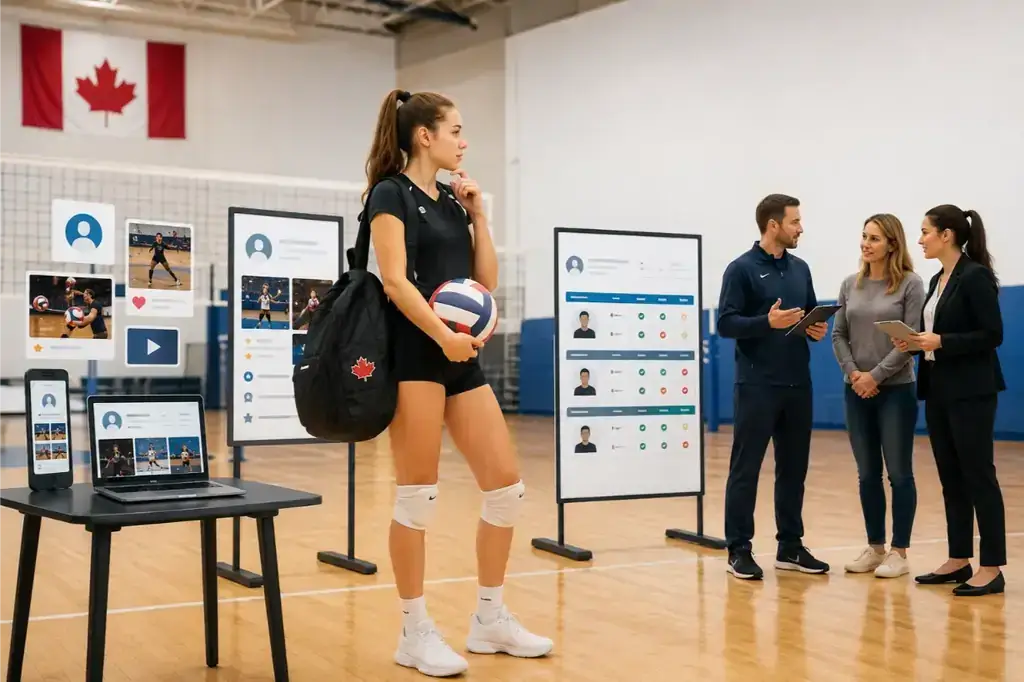

In theory, the NCAA Transfer Portal was designed to give college athletes more freedom, more mobility, and more control over their careers. But in practice—especially in women’s volleyball—it has reshaped the recruiting landscape in ways few families truly understand. What was once a predictable progression from high school to college athletics has evolved into a chaotic marketplace where proven college players hold all the leverage, high school recruiting classes shrink, and verbal commitments can evaporate overnight.
And yet, almost nobody is talking about how this new reality impacts the next generation of athletes—the high school players who are trying to earn scholarships in an environment that no longer resembles what it was even five years ago.
The question now is unavoidable: Is the transfer portal your ally… or your biggest obstacle?
- The Collapse of the Four-Year Development Model
- Verbal Commitments Are No Longer Secure
- Freshman Opportunities Are Shrinking
- The Rise of the “Portal Player” Advantage
- The Domino Effect on Mid-Major Programs
- Volatility in Scholarship Packages
- Early Commitments Offer No Protection
- Roster Instability and Constant Rebuilding
- Smarter Recruits Are Changing Their Evaluation Criteria
- The Harsh New Reality: The Portal Has Rewired Recruiting
The Collapse of the Four-Year Development Model
For decades, college volleyball programs were built around a long-term vision. Coaches identified high school prospects, recruited them early, and spent four years developing them into contributors. That model is largely gone. Many coaches now admit privately that they cannot plan more than one season ahead because half their roster might leave at any time.
When a lineup can change dramatically in a single offseason, investing years into developing younger athletes becomes a luxury. The portal has created a “win now” mindset across NCAA programs. Need a starting outside? Grab a transfer. Want more experience? Pick a junior who already has 50 college matches under her belt. Freshmen—no matter how talented—are often an uncertainty coaches can no longer afford.

Verbal Commitments Are No Longer Secure
Perhaps the most painful shift for families is the erosion of trust in verbal commitments. It’s now common for offers to be withdrawn just months—or even weeks—before signing day. Why? Because if a ready-made starter becomes available in the portal, many coaches will choose the proven athlete over the commit.
Imagine your daughter committing as a senior, only to have her position taken because a Power Five backup entered the portal. It happens every day. The message is clear: “Committed” no longer means “secure.”
Freshman Opportunities Are Shrinking
Before the portal took over, a typical Division I program signed four or five high school recruits every year. Today, many take one or two and fill the rest of their roster gaps with transfers. Why? Because transfers come with something coaches value above everything: certainty. They’ve played at the college pace. They understand the physical demands. They’ve already been tested.
For high school recruits, that means fewer openings, more competition for the limited freshman spots that remain, and significantly higher expectations to contribute immediately.
The Rise of the “Portal Player” Advantage
Another emerging trend is the type of athlete the portal favors. Height and physical upside have always mattered, but now they overshadow everything. A 6’2″ outside hitter who rarely saw the floor at a Power Five program may receive more interest than a decorated 5’10” high school star. Coaches often assume that if an athlete was recruited by a top program—even if she never cracked the lineup—she is a safer bet than an unproven high school athlete.
This dynamic punishes skilled, high-performing but undersized high school players and drives more coaches to prioritize transfers over traditional recruits.

The Domino Effect on Mid-Major Programs
The portal has also disrupted competitive balance. Mid-major programs that used to thrive on identifying and developing undervalued athletes now lose their best players every offseason. A standout freshman or sophomore at a mid-major is almost guaranteed to receive interest from higher-profile programs. In many ways, mid-majors have become feeder systems for the Power Five.
And when top talent is constantly drained upward, parity disappears—and roster building becomes even harder for coaches who cannot rely on keeping their own athletes for more than one or two seasons.
Volatility in Scholarship Packages
Scholarship consistency used to be a hallmark of Division I volleyball. Programs typically offered stable percentages, and families could plan financially. Now? Offers fluctuate dramatically. Some programs purposely start with lower scholarship commitments, assuming athletes will eventually leave for the portal—or be replaced by a transfer.
An 80% scholarship that used to be standard for elite recruits is increasingly becoming 40%, 30%, or a single semester of aid. The financial uncertainty adds yet another layer of risk for high school families navigating an unstable system.
Early Commitments Offer No Protection
Some athletes commit earlier than ever—sophomores, even freshmen—hoping to “lock in” a spot. Unfortunately, the portal has made early commitments almost meaningless. A program might accept a verbal commitment today and then replace that athlete two years later when a more experienced transfer emerges.
This has created a recruiting environment where high school athletes feel pressured to commit early but gain no real security from doing so.

Roster Instability and Constant Rebuilding
The one-time transfer exemption was introduced to help athletes avoid punitive rules and hardship waivers. But in reality, it opened the door to annual roster overhauls. Many programs now rebuild not through freshmen but through transfers—sometimes five, six, seven per offseason. It’s roster free agency, with turnover levels similar to professional sports but without the infrastructure to support it.
This environment is tough on coaches—but it’s even tougher on incoming freshmen who hoped for clarity and development opportunities.
Smarter Recruits Are Changing Their Evaluation Criteria
High school athletes are beginning to adjust. Families now analyze a program’s portal history as closely as its win-loss record. How many transfers does the program take each year? Do freshmen actually play? How many recruits have been replaced by portal athletes?
Athletes who choose based solely on name recognition or prestige may find themselves buried behind waves of incoming transfers. The smartest recruits now prioritize programs with stable rosters, clear development pathways, and a track record of honoring commitments.
The Harsh New Reality: The Portal Has Rewired Recruiting
The transfer portal has brought undeniable opportunities for college athletes—but it has also reshaped high school recruiting in ways that disadvantage the next generation. Fewer roster spots, shrinking scholarships, reduced trust in commitments, and unpredictable roster turnover have all combined to make the process harder than ever for high school players.
The portal isn’t inherently “good” or “bad.” But for families entering the recruiting world today, it is absolutely essential to understand the new reality:
You are no longer just competing against other high school athletes.
You are competing against experienced college players—every single year.
Create your free recruiting profile with us
Schedule a call with us and find out how we are different from the other agencies. Ask about our Money Back Guarantee.