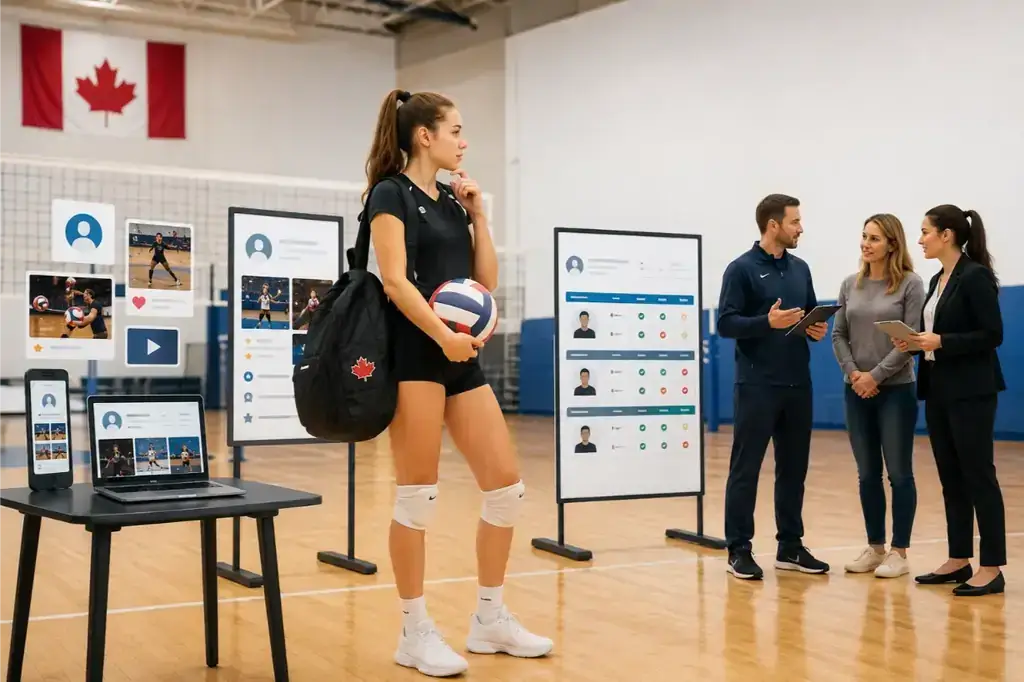

During the volleyball recruiting process, athletes and parents naturally focus on questions related to the court:
- Is the athlete good enough to compete at this level?
- Is the coach genuinely interested?
- Is an athletic scholarship available?
- How competitive is the volleyball program?
- Is there a realistic opportunity to play?
- How many athletes are already in the athlete’s position?
- What role does the coach see for the athlete?
These questions matter. However, they are only part of the decision.
Index
1. Would You Still Choose the School Without Volleyball?
2. What Is the Real Goal of Attending College or University?
3. How Much Can the Family Truly Afford?
4. Is This the Athlete’s Dream or the Parents’ Dream?
5. What Is the Athlete Unwilling to Compromise?
6. How Far From Home Is the Athlete Truly Ready to Live?
7. Is the Athlete Ready to Be Independent?
8. What Academic Sacrifices Are Acceptable?
9. What Type of University Experience Does the Athlete Want?
10. Who Is the Athlete Without Volleyball?
11. What Would Make the Athlete Leave?
A Family Volleyball Recruiting Exercise
The Goal Is Not Just to Receive a Volleyball Offer
An enthusiastic coach, an attractive scholarship offer or a well-known volleyball program can make a school feel like the perfect choice. Once the athlete arrives on campus, however, daily life involves much more than practices, matches, strength training and playing time.
The athlete must attend classes, manage money, live independently, develop new relationships, handle pressure and prepare for life after graduation.
That is why some of the most important volleyball recruiting questions families need to answer are not related to volleyball at all.
Before accepting an offer or committing to a school, athletes and parents should, no, … MUST discuss these difficult questions honestly.
1. Would You Still Choose the School Without Volleyball?
This may be the most important question in the entire volleyball recruiting process:
Would you still want to attend this school if you could no longer play volleyball?
Many things can change during a college or university career.
The athlete could be injured. The recruiting coach could leave. Playing time may be more limited than expected. The team environment could change. A new athlete could be recruited for the same position. The athlete may even decide that competitive volleyball is no longer the right choice.
If the school only makes sense because of one coach, one roster opportunity or one athletic promise, the decision may depend too heavily on circumstances the family cannot control.
The school should still provide:
- A suitable academic program;
- An affordable financial commitment;
- A location where the athlete can live comfortably;
- A positive student environment;
- Personal and professional development opportunities.
Volleyball may help open the door, but the university or college must still be a good choice if the original athletic plan changes.
2. What Is the Real Goal of Attending College or University?
Is the main goal to:
Families often begin volleyball recruiting without clearly defining what they want the final result to be.
- earn a strong degree?
- compete at the highest possible volleyball level?
- receive financial assistance?
- prepare for a specific career?
- study in the United States or another country?
- gain independence?
- experience life as a college athlete?
- enjoy a complete university experience?
There is no single correct answer.
The problem begins when the athlete and parents have different answers but never discuss them.
An athlete may want a balanced college experience, while the parents may prioritize the most prestigious volleyball program. The athlete may care deeply about a particular academic program, while the family may be focused mainly on the scholarship.
Before comparing schools, families should agree on what success should look like four years later.
A successful volleyball recruiting outcome is not simply receiving an offer. It is choosing a path that supports the athlete’s education, finances, personal development and future.

3. How Much Can the Family Truly Afford?
Scholarship discussions can become emotional.
When a volleyball athlete receives an offer, families may feel pressure to find a way to make the opportunity work. However, an offer is not automatically an affordable offer.
Families need to calculate the complete cost of attendance, including:
- Tuition and mandatory school fees;
- Housing and meal plans;
- Books and technology;
- Health insurance;
- Transportation;
- Flights or long-distance travel;
- Personal expenses;
- Currency exchange;
- Annual increases in tuition and living costs.
Canadian families considering NCAA or NAIA schools in the United States must pay particular attention to exchange rates and travel expenses. A manageable cost during one academic year may become significantly more expensive if the Canadian dollar changes.
Families should also understand what could happen financially if the athlete:
- Becomes injured;
- Leaves the volleyball team;
- Loses part of the scholarship;
- Transfers to another school;
- Takes longer than four years to graduate;
- No longer receives the same level of financial assistance.
One of the hardest questions parents must answer is:
How much can we contribute every year without creating serious financial pressure?
That amount should ideally be established before offers arrive, not after the family becomes emotionally attached to a particular school.
Parents naturally want to provide the best possible opportunity. However, a school that creates years of financial stress may not be the best choice for the athlete or the family.
4. Is This the Athlete’s Dream or the Parents’ Dream?
This may be one of the most uncomfortable conversations in volleyball recruiting.
Parents often invest years of time, money and energy into their child’s volleyball development. They drive to practices, attend tournaments, pay club fees, arrange private training and support the athlete through difficult moments.
After such a major investment, playing college or university volleyball may feel like the expected next step.
But does the athlete genuinely want the student-athlete lifestyle?
The athlete should be able to answer:
- Do I still enjoy competing at this level?
- Am I prepared for the time commitment?
- Do I want practices, matches, travel, video sessions and strength training to control much of my schedule?
- Would I prefer a less demanding volleyball level?
- Do I want more freedom for academics, internships or student activities?
- Am I continuing because I want to, or because I am afraid of disappointing someone?
Some athletes love volleyball but do not want it to control their university experience. Others want to continue competing, but not necessarily at the highest level available to them.
Parents should guide, educate and protect the athlete. The athlete, however, must genuinely want the commitment.
5. What Is the Athlete Unwilling to Compromise?
Very few schools will satisfy every preference.
One university may offer the strongest academic program but limited playing opportunities. Another may provide more financial assistance but be far from home. A third may have an excellent volleyball coach but not offer the athlete’s preferred major.
Families should identify their non-negotiables before evaluating offers.
These may include:
- A specific academic program;
- A maximum annual cost;
- A preferred country or region;
- Campus size;
- Distance from home;
- Access to an airport;
- Career and internship opportunities;
- Cultural or community fit;
- Student support services;
- Campus safety;
- A healthy volleyball team environment.
Athletes and parents should create their own lists separately and then compare their answers.
This discussion helps the family distinguish between true priorities and features that would simply be nice to have.
Without clearly defined priorities, families can easily be influenced by recognizable university names, impressive volleyball facilities, social media commitment announcements or the excitement of being recruited.
6. How Far From Home Is the Athlete Truly Ready to Live?
Saying, “I want to move away,” is different from living hundreds or thousands of kilometres from home.
The athlete should consider:
- How often do I expect to return home?
- Can my family afford regular travel?
- Am I comfortable flying or travelling alone?
- How do I normally handle homesickness?
- Can I build a support system in a new place?
- Am I comfortable living in a different climate or culture?
- Can I manage problems without my parents being physically present?
Parents also need to prepare for a different role.
They may not be able to solve roommate problems, communicate with professors or step into every difficult situation. They should also understand that contacting the volleyball coach whenever there is a concern may not be appropriate.
Their role will gradually change from manager to adviser or support.
Living farther from home can be an important part of developing independence. However, the athlete should not choose a distant school simply because it feels exciting during a short campus visit.
The family needs to consider what everyday life will look like after the excitement of recruiting, commitment announcements and orientation has passed.
7. Is the Athlete Ready to Be Independent?
Volleyball recruiting evaluates an athlete’s performance, physical ability and potential. It does not always evaluate whether the athlete can manage everyday life independently.
College volleyball athletes must balance:
- Practices;
- Strength and conditioning;
- Matches and travel;
- Classes and assignments;
- Recovery and sleep;
- Meals and nutrition;
- Personal responsibilities.
Families should honestly assess whether the athlete can:
- Wake up and arrive on time without reminders;
- Manage assignments and deadlines;
- Communicate with professors;
- Ask questions when confused;
- Keep track of important documents;
- Manage a personal budget;
- Handle laundry and basic daily tasks;
- Resolve disagreements with teammates or roommates;
- Recover emotionally after mistakes or disappointing performances;
- Ask for help before a problem becomes serious.
The real question is not simply whether the athlete can live away from home.
It is:
Can the athlete manage responsibility, pressure and disappointment when the family is not immediately available to solve the problem?
The athlete does not need to be completely prepared for every challenge. However, the family should identify which skills must be developed before the first semester begins.
8. What Academic Sacrifices Are Acceptable?
A strong volleyball opportunity can sometimes distract families from academic concerns.
The athlete should confirm that the school offers the right academic program, not simply a program with a similar name.
Important questions include:
- Does the school offer the athlete’s preferred major?
- Is the program properly accredited?
- Can required courses fit around the volleyball schedule?
- Are laboratories, placements or internships difficult to combine with team travel?
- What happens if the athlete changes majors?
- Are tutoring and academic support services available?
- Will credits transfer if the athlete later changes schools?
- Does the program support the athlete’s long-term career plans?
Some programs may be especially difficult to combine with the demands of college volleyball. Programs involving laboratories, clinical placements, co-op terms or extensive internships may require additional planning.
An athlete may be willing to make some academic compromises in exchange for a particular volleyball opportunity. That is a personal decision.
However, the compromise should be understood and accepted before the athlete commits, not discovered after arriving on campus.
A difficult but important question is:
Will the athlete still be comfortable with this academic decision ten years from now?
9. What Type of University Experience Does the Athlete Want?
College volleyball can provide friendships, structure, travel and a strong sense of belonging. It can also require a significant amount of time.
Volleyball athletes may have fewer opportunities to participate in:
- Student clubs;
- Part-time employment;
- Internships during the season;
- Study-abroad programs;
- Weekend trips;
- Social events;
- Family holidays;
- Activities outside the team.
The athlete should think about which parts of the university experience matter most.
Some athletes are happy to build much of their social life around the volleyball team. Others want more freedom to explore different interests, friendships and experiences.
Neither choice is wrong.
The important question is whether the athlete understands what the college volleyball schedule may require and is comfortable with the trade-offs.
10. Who Is the Athlete Without Volleyball?
For many recruited volleyball athletes, the sport has been a central part of their identity since childhood.
They may be known as “the volleyball player.” Their friendships, weekly schedule, confidence and personal goals may all be connected to the sport.
But what happens if the athlete becomes injured, receives limited playing time, loses confidence or decides to stop competing?
Families should help athletes develop an identity beyond volleyball performance.
Questions worth discussing include:
- What other interests do you have?
- What type of career would you like to explore?
- Which relationships matter outside the volleyball team?
- What personal strengths are not connected to volleyball?
- What would give you purpose if you could no longer compete?
This does not reduce the importance of volleyball.
It gives the athlete a stronger foundation when the recruiting journey becomes difficult or the competitive volleyball career eventually comes to an end.
11. What Would Make the Athlete Leave?
Families spend a great deal of time discussing why an athlete should choose a school. They rarely discuss what circumstances could make remaining at that school unhealthy or impractical.
Before committing, families should consider possible situations such as:
- The volleyball coach leaving;
- A significant change in team culture;
- Continued academic difficulty;
- Serious financial pressure;
- Physical or mental health concerns;
- Losing financial assistance;
- Discovering that the academic program is unsuitable;
- An unhealthy living environment;
- The athlete no longer enjoying volleyball.
The purpose is not to create an exit plan for every difficult moment.
Challenges, disappointment and periods of uncertainty are normal parts of becoming an independent adult and college athlete.
However, the family should understand the difference between a difficult situation that should be worked through and a situation that may require a change.
A Family Volleyball Recruiting Exercise
Athletes and parents should answer the following questions separately before discussing them together:
- What are the five most important factors when choosing a school? (check this article about how to select a school)
- What are three absolute deal-breakers?
- What is the maximum affordable annual cost?
- How far from home is acceptable?
- Which academic programs are acceptable?
- What type of university experience does the athlete want?
- Which parts of the decision should belong entirely to the athlete?
- What circumstances could make transferring or leaving reasonable?
- Would the athlete still choose the school without volleyball?
- What should the athlete’s life look like after graduation?
The purpose is not to produce identical answers.
The purpose is to identify differences early, while the family still has time to discuss them calmly.
The Goal Is Not Just to Receive a Volleyball Offer
Volleyball recruiting success is often presented as the moment an athlete receives an offer or announces a commitment.
In reality, that moment is only the beginning.
The strongest decision is one that continues to make sense when circumstances change. The athlete should be able to develop academically, personally and athletically, even if the coach changes, playing time is limited or the original volleyball plan does not develop as expected.
The goal is not simply to find a volleyball team that wants the athlete.
The goal is to choose a school, education and environment where the athlete can build a successful life.
Before making a volleyball recruiting decision, schedule a complimentary conversation with our team to explore the available options, clarify your family’s priorities and identify the path that best fits the athlete’s goals.