
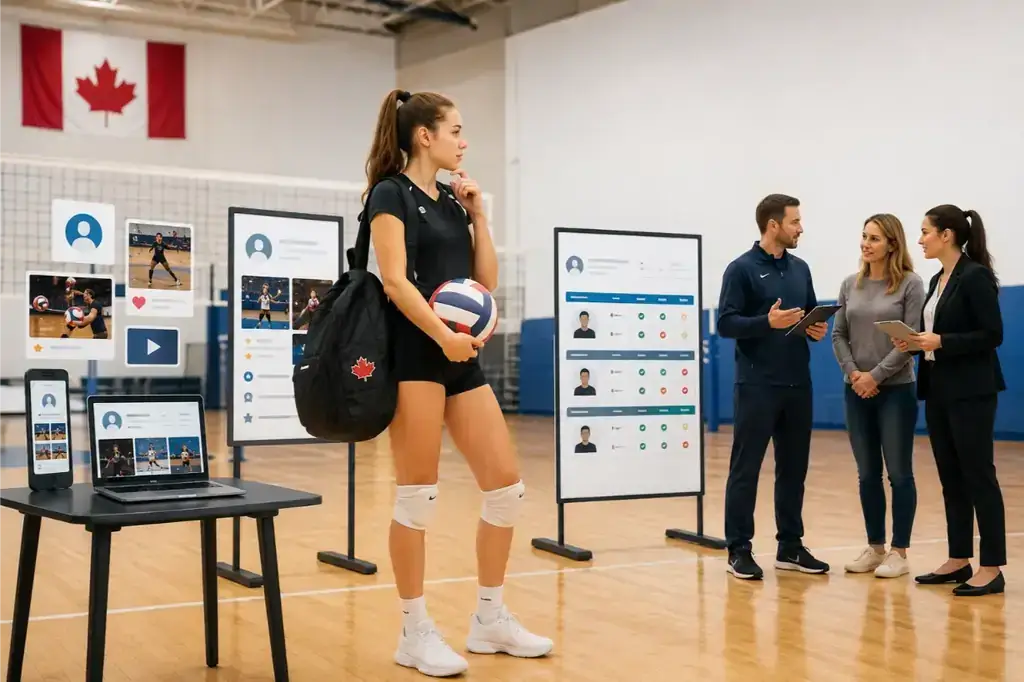
Click here to download the checklist for an easier comparison.
Canadian volleyball players who want to compete at a university or college have several ways to approach recruiting.
Some athletes manage the entire process themselves. Others create a personal volleyball recruiting profile, subscribe to a volleyball recruiting portal, ask a coach for help or work with a professional volleyball recruiting agency.
Each path has advantages and disadvantages.
The right option depends on your goals, available time, budget, level of recruiting knowledge and how much support your family needs.
This guide compares six common volleyball recruiting options for Canadians so athletes and parents can make a more informed decision.
Summary: Which Volleyball Recruiting Option Is Best?
There is no single recruiting option that is best for every Canadian volleyball player.
Athletes who are organized, confident and prepared to invest significant time may be able to manage recruiting independently. A personal recruiting profile can make that process more professional and keep important information in one place.
Recruiting portals provide additional tools, coach databases and tracking features, but athletes are still responsible for researching schools, contacting coaches and following up.
A coach, independent recruiter or smaller agency can provide personal guidance, although their network, availability and resources may vary.
Premium recruiting agencies provide the highest level of support and normally require less work from athletes and parents. However, they also involve a larger financial investment and may only accept athletes they believe they can successfully help.
The main difference between these options is not simply cost. It is the amount of time, expertise, organization, outreach and responsibility that remains with the athlete and family.
Table of Contents
1. DIY Recruiting Through Multiple Free Accounts
The most affordable approach is to organize recruiting through free online accounts and tools.
An athlete might use:
- Instagram or another social platform for volleyball clips
- YouTube for highlight videos
- Google Drive for transcripts and documents
- Email for contacting coaches
- A spreadsheet for tracking programs and conversations or to select the schools
- Separate tournament, team and statistical websites
Advantages
The main advantage is cost. Most of these tools can be used for free.
Athletes also have full control over their information, school list, messages and recruiting strategy. They can begin immediately without subscribing to a platform or hiring a recruiter.
This method can work for a highly organized athlete who understands the recruiting process and is comfortable communicating with coaches and has time to do it.
Disadvantages
The information can quickly become scattered across several accounts.
A coach may need to open one link for a video, another for statistics and another for academic information. Important details may be missing, inconsistent or outdated.
The athlete or parent must also:
- Research suitable schools
- Find current coaching contacts
- Write personalized emails
- Track messages and responses
- Follow up with coaches
- Update videos and schedules
- Understand the different recruiting steps
- Compare athletic, academic and financial options
Although this approach may be free financially, it can require a considerable investment of time.
Make sure you are comfortable dealing with anxiety, stress and headaches! (not joking)
Best for: Independent and highly organized athletes with strong recruiting knowledge and enough time to manage the process consistently.

2. DIY Recruiting With a Personal Volleyball Profile Page
A personal profile page brings an athlete’s important information together in one location.
Instead of sending coaches several separate links, the athlete can share one page containing their:
- Athletic information
- Academic information
- Volleyball history
- Position and physical measurements
- Highlight videos
- Tournament schedule
- Contact information
- Achievements and awards
The Volleyball Athletes recruiting profile page is designed as an online volleyball résumé for athletes managing their own recruiting.
As of July 2026, a profile costs CAD 100 plus taxes per season. A season runs from September 1 to August 31 of the following year.
Advantages
A personal profile gives coaches one clear destination where they can review an athlete.
It looks more professional than sending a collection of social media accounts, cloud-storage folders and unrelated links.
The cost is also relatively affordable compared with full recruiting platforms and professional recruiting services.
Athletes can use the profile in emails, direct messages, applications and conversations with coaches.
Disadvantages
A profile page is a recruiting tool, not a complete recruiting service.
The athlete and family are still responsible for identifying appropriate programs, contacting coaches, writing emails, following up and managing the process.
The profile also needs to be updated when the athlete has:
- A new highlight video
- New academic results
- A new tournament schedule
- Updated measurements
- New achievements
- A change in contact information
A strong profile makes recruiting more organized, but it does not remove the work involved.
Best for: Athletes who want an affordable and professional recruiting presence but are comfortable handling outreach independently.
3. DIY Recruiting With a College Recruitment Portal
A recruiting portal combines several tools within one platform.
For example, All Canadian Recruitment Portal offers athlete profiles, a college coach database, email outreach, engagement tracking, follow-up management and a recruitment pipeline.
Its website currently lists a CAD 300 annual plan.
Advantages
A portal can make recruiting easier to organize.
Instead of maintaining several spreadsheets, accounts and documents, the athlete can manage more of the process from one dashboard.
Depending on the platform, athletes may be able to:
- Research college programs
- Access coach contact information
- Create an athletic profile
- Send messages
- Track which coaches opened an email
- Monitor profile and video activity
- Schedule follow-ups
- Organize interested schools
These features can save research time and help families avoid losing track of conversations.
Disadvantages
Most recruiting portals remain DIY services.
The software provides the tools, but the athlete must still decide:
- Which schools are realistic
- Which coaches to contact
- What to say
- When to follow up
- How to present their athletic ability
- How to compare opportunities
- When to change their strategy
Access to a large coach database does not automatically create meaningful relationships with those coaches.
The annual cost is also higher than a standalone profile page, and Canadian families should remember that a fee charged in U.S. dollars will cost more after currency conversion.
Best for: Athletes who want stronger technology, research and tracking tools but are still prepared to manage their own recruiting campaign.
4. DIY Recruiting With Help From a Coach or Independent Recruiter
Some athletes ask a club coach, high school coach, skills coach or independent recruiter to help with recruiting. They will count on their personal connections. They can be strong connections, but limited in exposure.
This support may include:
- Evaluating the athlete’s playing level
- Recommending suitable programs
- Reviewing highlight videos
- Helping with emails
- Making introductions
- Speaking with college coaches
- Explaining what coaches may be looking for
Advantages
A coach who knows the athlete can provide personal insight into their ability, character and potential.
A trusted recommendation may also help an athlete establish credibility with a college coach.
This option can be affordable or even free when recruiting guidance is included as part of the athlete’s existing coaching relationship.
Disadvantages
The quality and extent of support can vary significantly.
A coach may be highly knowledgeable about volleyball but may not have enough time to manage an athlete’s complete recruiting process.
Their connections may also be concentrated in a specific province, conference, division or group of schools.
Families should not assume that every successful volleyball coach is also an expert in cross-border recruiting, academic fit, financial comparisons or the administrative parts of U.S. college placement.
Before relying on one person, ask exactly what they will do and what will remain the family’s responsibility.
Best for: Athletes who already have access to a trusted coach or recruiter with relevant recruiting experience and verifiable connections.
5. Working With a Small Recruiting Agency
A smaller or boutique recruiting agency normally provides more personal assistance than a self-service portal, covering one or two sports, with limited outreach.
Services may include:
- Recruiting consultations
- Profile development
- Video advice
- School research
- Coach outreach
- Email support
- Recruiting education
- Guidance during conversations with programs
Advantages
A smaller agency may provide a close and personal relationship with the athlete.
The family may communicate directly with the owner or primary recruiter instead of moving between several departments.
A specialized agency may also understand a specific sport, province or type of college program particularly well.
Disadvantages
Agency size alone does not indicate service quality.
A smaller company may have fewer staff members, less technology, a narrower coaching network or limited capacity during busy recruiting periods. However, some boutique agencies have excellent sport-specific relationships.
Families should evaluate the actual service rather than making a decision based only on company size.
Important questions include:
- Who will contact coaches?
- How many athletes does each recruiter manage?
- Which divisions and conferences does the agency work with?
- Does the agency have experience with Canadian athletes?
- What services are included?
- Is video production included?
- Does the agency assist with admissions and financial discussions?
- What happens if the athlete does not receive an appropriate opportunity?
- Are results, testimonials and commitments verifiable?
Best for: Families who want personal guidance and more support than a portal provides but do not necessarily need a fully managed premium service.
6. Working With a Premium Recruiting Agency
A premium recruiting agency offers a more complete and hands-on approach.
Through its partnership with StudBud, Volleyball Athletes provides premium U.S. college volleyball recruiting services for Canadian indoor and beach volleyball players.
The service is positioned as a white-glove recruiting option requiring minimum effort from athletes and parents. Support includes personalized recruiting plans, college connections and guidance through different parts of the recruiting journey.
Depending on the program, services may also include athlete outreach, highlight video support, coach communication, admissions assistance and scholarship guidance and negotiations.
Advantages
The largest benefit is professional support.
Instead of asking parents to learn every part of recruiting while the athlete is balancing school, practices and tournaments, the agency manages more of the process.
A premium service may help with:
- Evaluating the athlete’s goals
- Building a recruiting strategy
- Preparing recruiting materials
- Identifying suitable schools
- Presenting the athlete to coaches
- Managing communication
- Creating or improving highlight videos
- Comparing opportunities
- Supporting admissions steps
- Discussing athletic and financial fit
- Negotiating packages and NIL deasl (when available)
StudBud also advertises a money-back guarantee for eligible services. Its published volleyball terms state that the athlete pays the balance only when they receive and accept a suitable scholarship offer; families should review the exact program conditions before enrolling.
Disadvantages
Premium recruiting is generally the option with the largest financial commitment.
It may also not be available to every athlete. Agencies that offer guarantees must evaluate candidates carefully and may only accept athletes they believe they can successfully represent.
Athletes still need to provide information, attend meetings, communicate honestly, maintain their academics and volleyball performance, and respond when action is required.
“Minimum effort” does not mean “no effort.”
Families must also understand the terms of any guarantee. Ask what is considered a suitable offer, which programs are eligible and what responsibilities the athlete must meet.
Best for: Serious athletes pursuing U.S. college opportunities whose families want professional representation, broader support and less responsibility for day-to-day recruiting administration.
| Recruiting option | Approximate cost | Athlete and parent effort | Professional support |
| Multiple free accounts | Free | Very High | None |
| Personal recruiting profile | CAD 100 plus taxes per season | High | Profile platform |
| College recruiting portal | CAD 300 per year | High to moderate | Technology and resources |
| Coach or independent recruiter | Varies | Moderate to high | Depends on the person |
| Small recruiting agency | Varies | Moderate | Personalized but varies |
| Premium recruiting agency | Program-based | Lower | Full-service professional support |
Prices were verified in July 2026 and may change. Families should confirm current pricing, inclusions, eligibility requirements and guarantee conditions directly with each provider.
How to Choose the Right Recruiting Path
Start by asking what your family actually needs.
How much time can you invest?
DIY recruiting requires regular research, outreach, follow-up and organization. Families who cannot maintain that workload may benefit from professional support.
Are you comfortable contacting coaches?
Some athletes are confident writing emails and starting conversations. Others need help presenting themselves effectively and professionally.
Do you know which programs are realistic?
A long list of schools is not necessarily a good school list. Athletic level, academic goals, location, finances and team needs all matter.
How organized are you?
Recruiting involves deadlines, messages, videos, documents, schedules and follow-ups. A missed email or outdated profile can create unnecessary problems.
Are you pursuing Canadian or U.S. programs?
An athlete focusing mainly on nearby Canadian programs may need a different strategy from an athlete targeting NCAA, NAIA or junior college opportunities in the United States.
What level of risk is comfortable for your family?
Compare the price of each option with the time required, support provided and terms offered. The cheapest option financially may demand the most family time. The most expensive option may provide the greatest amount of professional help.
How far from your family are you willing to be?
This is one of the first questions needing an answer before starting to think about schools. It will be one of the criteria for selecting the schools. Do not leave the answer to the end of the recruiting process. Save your time and respect others’ time (aka recruiting coaches).
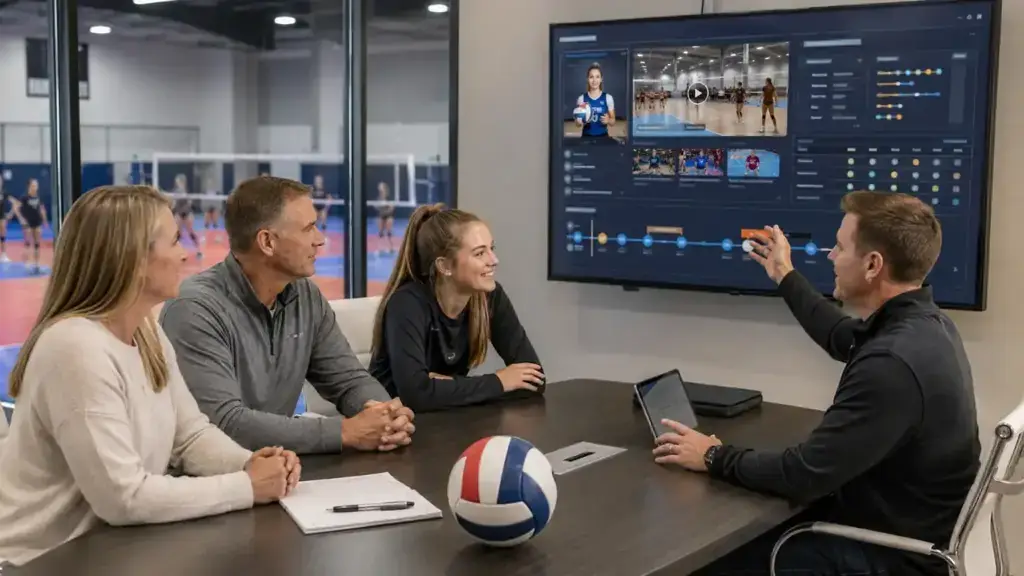
Final Thoughts
Canadian volleyball athletes have more recruiting tools available than ever before.
You can create several free accounts, build a personal profile, subscribe to a portal, ask a coach for help or hire a recruiting agency.
The important question is not simply, “Which option costs the least?”
A better question is:
Which recruiting option gives our family the right combination of control, time commitment, organization, expertise, connections and financial protection?
Athletes who enjoy research and outreach may succeed with a DIY approach. Families who want their information organized can begin with a personal volleyball recruiting profile.
Athletes who are serious about pursuing U.S. opportunities but want more guidance can explore premium volleyball recruiting services for Canadian athletes.
Before making a decision, learn what each service includes, ask direct questions and choose the path that fits the athlete—not simply the option that appears easiest or most popular.
Frequently Asked Questions
What is the least expensive volleyball recruiting option?
Managing recruiting through free email, social media, video and spreadsheet accounts is usually the least expensive option. However, it requires the athlete and parents to perform all the research, communication, tracking and follow-up themselves. And it comes with a lot of headaches and anxiety!
Is a personal recruiting profile enough to get recruited?
A personal profile is a useful recruiting tool, but it does not replace outreach. Athletes still need to identify appropriate programs, contact coaches, follow up and keep their information current.
What is the difference between a recruiting portal and a recruiting agency?
A portal primarily gives the athlete technology, information and communication tools. A recruiting agency provides people who help build and carry out the strategy. With a portal, the athlete generally manages the process. With a full-service agency, the recruiter performs more of the research, outreach and coordination.
Can my volleyball coach manage my recruiting?
A club or school coach may be able to provide valuable advice and introductions. However, their time, recruiting knowledge and connections may be limited to certain programs. Ask what support the coach can realistically provide before relying on them to manage the entire process.
Are recruiting agencies only for elite athletes?
Not necessarily. Different agencies work with different athletic levels, divisions and budgets. However, agencies offering guarantees may evaluate athletes before accepting them to determine whether they are a suitable candidate.
Does a money-back guarantee mean an athlete is guaranteed a scholarship?
No. Families should carefully review the wording and conditions. StudBud states that eligible athletes receive their deposit back when the agency cannot secure a suitable scholarship offer under the applicable program terms. The athlete must also meet the responsibilities established in the agreement. Schedule a complimentary call to have your questions answered.
Which volleyball recruiting option is best for Canadian athletes?
The best option depends on the athlete’s goals, budget, available time and need for support. Independent athletes may prefer a profile or recruiting portal. Families seeking hands-on guidance and coach outreach may be better suited to a recruiting agency.